



16 October 2026
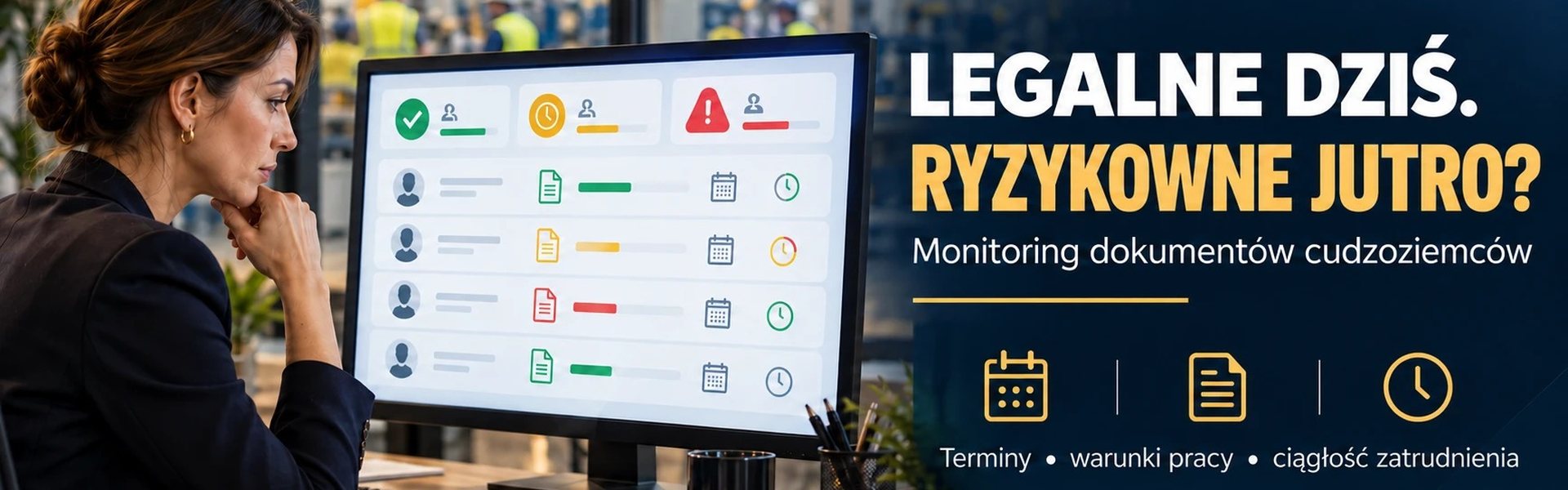
Monitoring foreign workers' documents: a valid date is not everything
The legal employment of a foreigner must be monitored throughout the cooperation – a valid date on a residence card, visa or work permit alone does not mean the worker can do any job on any terms.
The employer, position, scope of duties, place of work, salary, working hours and type of contract also matter. That is why monitoring should not be limited to recording a document's expiry date.
When should an employee's documents be re-checked?
Checks should be carried out not only before hiring, but also before every significant change concerning the employee. This applies in particular to:
- a change of position or scope of duties;
- a change of place of work;
- a change of salary or working hours;
- a change of contract type;
- a transfer of the employee to another company;
- receipt of a new residence decision;
- loss or change of the basis of stay;
- documents approaching their expiry date;
- the start of another residence or work procedure.
Not every change automatically requires a new permit. The regulations provide exceptions, for example for certain pay rises, changes of job title without a change of duties, or an increase in working hours.
From 8 July 2026, changing a civil-law contract to an employment contract also does not always require a new permit or declaration.
However, every case must be assessed on the basis of the specific document and current regulations – before the change is made.
Does a residence card show all the conditions of work?
No. The plastic residence card confirms a specific residence entitlement, but it usually does not show all the conditions of work.
This information may be in the administrative decision, the work permit or the declaration, or may result from another basis for access to the labour market. A decision on temporary residence and work may specify, among other things:
- the employer;
- the position or type of work;
- the minimum permitted salary;
- the working hours;
- the period of validity of the permit.
That is why, before hiring, you should ask the foreigner not only for the residence card, but also for the decision and other documents that form the basis of legal stay and work.
Can a foreigner be transferred to another company in the group?
For the organisation, moving an employee between companies may look like an internal HR change. From a legal perspective, however, they are two separate entities.
A permit issued for one company does not, as a rule, automatically entitle the person to work for another. Before the change, you need to establish whether the employee has free access to the labour market, whether a new document will be needed and from when employment by the new company will be possible.
The check should be carried out before signing the new contract and allowing the employee to start work.
When should the next procedure be started?
The regulations do not set a single deadline for starting preparations for all types of documents. The timing depends on the basis of stay, the type of permit, the employee's situation and the procedure to be carried out.
In practice, it is worth starting to review documents about 6–8 months before they expire. This is not a statutory deadline, but a safe time to:
- agree on further employment plans;
- choose the right procedure;
- collect the employer's and employee's documents;
- check the passport and residence documents;
- prepare and file the application;
- plan a solution for the waiting period.
You should not assume that there is always an automatic protection period after a document expires. The possibility of continued legal stay or work may result from specific provisions and depends on the correct and timely completion of a particular procedure.
Why a spreadsheet alone may not be enough
A spreadsheet can remind you of deadlines, but with a larger number of employees it often does not show the full picture. Apart from the expiry date, you need to monitor:
- the basis of stay and access to the labour market;
- the employer named in the document;
- the conditions of work;
- reporting obligations towards the authorities;
- the status of ongoing proceedings;
- the completeness of documents;
- the person responsible for the next step;
- the impact of HR changes on the legality of employment.
With dozens or hundreds of employees, manually keeping several spreadsheets, mailboxes and paper files increases the risk of missing important information.
What does effective document monitoring look like?
A well-organised system should combine residence documents, work authorisation documents and current HR data. It should also:
- send alerts well in advance;
- show documents that need updating;
- assign responsibility for next steps;
- record changes of position, salary and place of work;
- store the history of completed procedures;
- allow documentation to be prepared quickly for an inspection.
Frequently asked questions
Is a valid residence card enough to employ a foreigner?
Not always. The card confirms a residence entitlement, but the conditions of work – employer, position, salary, working hours – result from the decision, permit, declaration or another basis for access to the labour market.
When should we start preparing to extend documents?
In practice, about 6–8 months before they expire. This is not a statutory deadline, but a safe time to choose the procedure and prepare the application.
Does a transfer to another company in the group require a new permit?
As a rule, a permit issued for one company does not automatically entitle the person to work for another – this must be checked before signing the new contract.
Prepared by: the immigration team at Legal.IN, Wrocław · updated: 16.10.2026
Legal.IN runs a foreign worker document monitoring dashboard integrated with HR and payroll services. The system lets you control documents, terms of employment, reporting deadlines and the status of ongoing procedures. More information: work and residence permits for foreigners and HR support in employing foreigners.
If you employ a larger number of foreigners, check whether your system monitors not only document expiry dates but also the actual conditions of work: +48 791 437 628 (work and residence permits), +48 578 555 329 (B2B cooperation and accounting), kontakt@legal-in.pl or the contact form.